We'd like to hear from you.
Phone line
Mon to Fri 8:00am-4:00pm
Working hours
451 Atkinson Dr
Honolulu, HI 96814
Honolulu, HI 96814
Visit us
News
25 Years of Organizing: A Conversation with Ron Clough
May 25, 2026
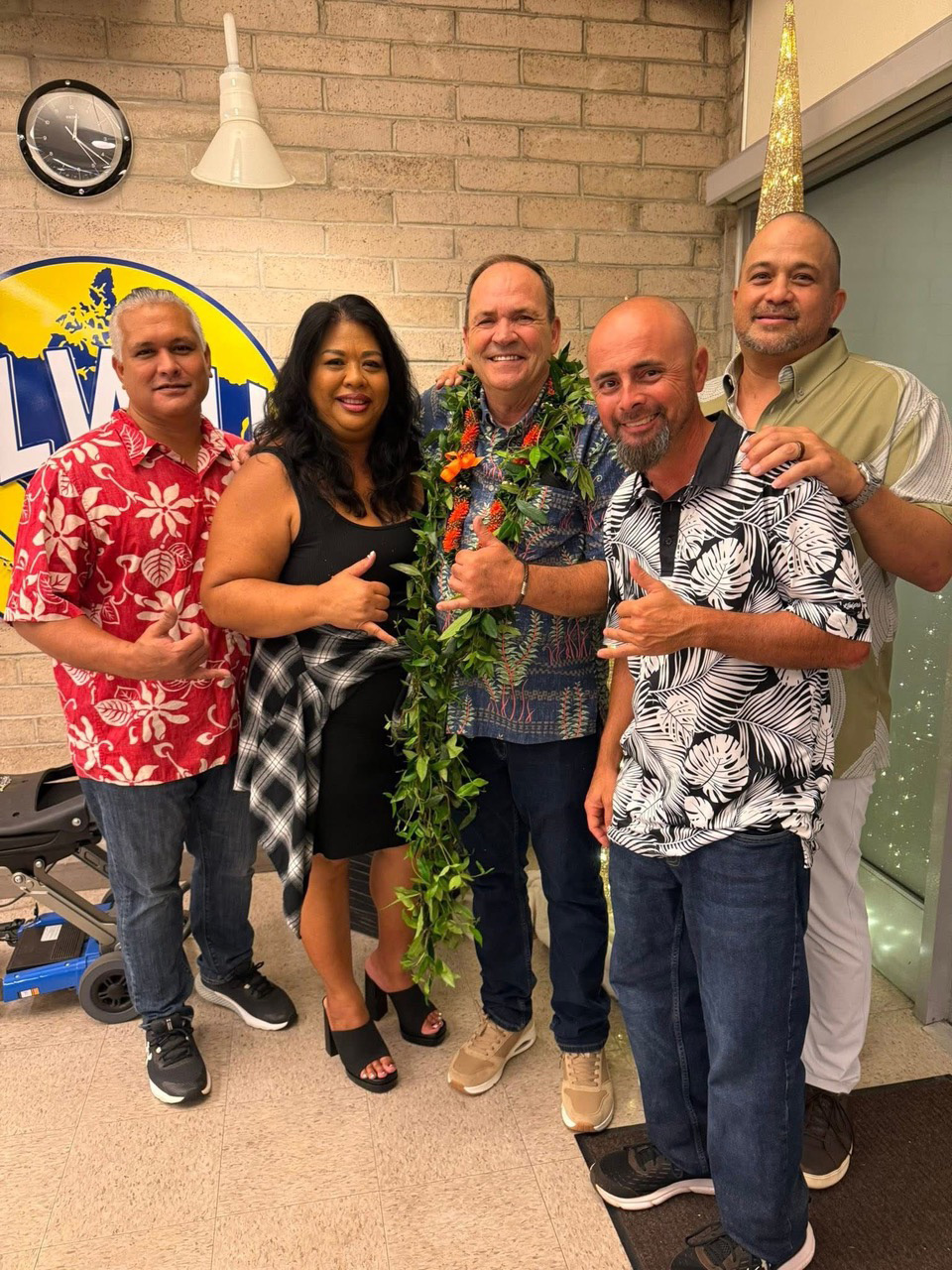
After 25 years of service, ILWU Local 142’s Lead Organizer Ron Clough retired in January, closing out a career that spanned every island and touched thousands of workers. From his beginnings as a rank-and-file worker in an organizing drive to becoming one of the Union’s most experienced organizers, Ron’s journey reflects the heart of the ILWU, one that is worker-led, grounded, and built on relationships.
We sat down with Ron to reflect on his time with the ILWU Local 142.
What brought you to the ILWU?
I actually came in through an organizing drive at my own workplace. I voted in favor of unionizing with ILWU Local 142. When I found out it was the ILWU, I was all for it—I knew the Union from growing up in the Bay Area.
Not long after we organized, I ran into issues on the job and was facing termination. Looking back, I felt like I was being made an example of because we had organized. It was a tough time—it was during the holidays—and I was constantly calling the Union, trying to get help.
Isaac Fiesta was the business agent at the time. I was probably calling him more than I should have, even while he was on vacation. But he always answered or got back to me. That stuck with me.
Later, when I became an organizer, I carried that with me. I might not always be able to answer right away, but I made it a point to always return calls. Right before I retired, a member told me, “You always got back to us.” That meant a lot, because it reminded me that I didn’t forget where I came from.
Eventually, I was offered a temporary position with the Union while my case was going through the process. That “few months” turned into 25 years. Someone saw something in me, and I’m grateful for that. It gave me the opportunity to do this work and to become who I was in the Union.
What did the work of organizing teach you?
One of the things I was most fortunate for was being able to work with so many different leaders across all the islands. Every person has strengths and weaknesses, and I learned by observing—taking the good from each person and incorporating it into my own way of doing things.
Organizing isn’t just about signing people up. It’s about communication, education, and trust.
Communication was a big one for me. Early on, I didn’t even like talking on the phone. I was fine in person, but the phone was not my thing. Over time, that changed completely. You can’t do this job without learning how to communicate in every way possible.
Another big part of the work is education. When you’re organizing a new Unit, you’re helping workers understand what a union is, how contracts work, and what their rights are. You’re breaking down each section of a contract, explaining proposals, and making sure people understand what they’re fighting for.
I didn’t know how to do all that at the beginning. But over time, I got to the point where I could walk a group through every aspect of a contract so they could make informed decisions. In that sense, the organizer becomes the first Union educator.
Is there an organizing campaign that stands out to you?
There are a few, but one of the earliest was the Ohana Keauhou Beach Hotel. That one stands out because of how complicated it was.
We initially organized part of the workforce, but food and beverage workers were subcontracted, so they weren’t included. Negotiations stalled, and then we had a separate election for the F&B workers. The company challenged the election, and the ballots were sealed before we could even count them. That was something I had never seen before.
At that point, we had a decision to make. We could keep fighting through the legal process, or we could push for a wall-to-wall election that included everyone.
I believed we could win if we brought the whole workforce together. It wasn’t the most popular position at the time, but I stood up and said I knew we had the support.
We went wall-to-wall—and we won. After that, everything changed. The company could see that the entire workforce was united, and we were able to reach a contract much more quickly.
The lesson there is that you have to trust the people on the ground. The organizers and leaders who are talking to workers every day—they understand where things stand. Decision-makers have to listen to that.
Another campaign I’m really proud of is the Princeville Resort. That was years of work—multiple elections, challenges, and even closures and reopenings. We had to fight to organize it, and then fight again to make sure it stayed union when it came back.
That kind of long-term commitment is what organizing really is. It’s not one moment—it’s years of staying with something and seeing it through.
What does today’s labor landscape demand from organizers?
We’re in a challenging moment right now. The system that’s supposed to protect workers, especially the NLRB, isn’t as strong as it needs to be. That makes it easier for employers to push back and harder for workers to organize.
At the same time, workers are under more pressure than ever. The way people are being treated on the job is pushing more of them to look for solutions, and unions are part of that.
So there’s both a challenge and an opportunity. For organizers today, the most important thing is listening. You have to understand what workers are going through and meet them where they are. A lot of people don’t have any experience with unions, so you have to connect with them on their issues first.
I always told people: unions aren’t perfect. But they’re a lot better than being on your own.
Another reality is that employers are communicating with workers all the time—24/7. Organizers don’t have that same access. So when you do get the opportunity to talk to someone, you have to make it count. You have to build trust.
What’s something that stayed with you over the years?
One thing that always stood out to me is that some of the people who started off the most anti-union ended up becoming some of the strongest union supporters.
Once they go through the process, once they understand what it really means and see the impact, their perspective changes. That transformation is powerful, and it’s something I saw over and over again.
It’s a reminder not to write people off. Everyone has their own path to understanding.
What are your plans for retirement?
Right now, I’m catching up on things at home that I didn’t have time for after traveling the islands for so many years. I want to spend more time with my family and do some traveling—but this time for fun, not for work.
Any final message to the members?
I just feel really fortunate. Fortunate to have been given this opportunity, to meet so many people, and to build relationships across the islands.
I appreciate all the friendships I’ve made along the way. And I’m grateful that I had the chance to hopefully make a difference in people’s lives.
I’m also glad I could share what I’ve learned with the next generation of organizers and members who are stepping up.
A Legacy Carried Forward
Ron Clough’s 25 years with ILWU Local 142 is a story of persistence, humility, and deep commitment to workers. From his own experience organizing on the shop floor to helping lead campaigns across Hawaiʻi, his career reflects a core truth of the labor movement: that real power comes from workers themselves.
His approach—grounded in listening, trust, and respect for the rank and file—helped build stronger units and stronger contracts across the islands.
As Ron steps into retirement, the lessons he leaves behind remain. Organizing is not just about winning elections or contracts—it’s about building relationships, developing leaders, and believing in the collective strength of working people. That work continues.