We'd like to hear from you.
Phone line
Mon to Fri 8:00am-4:00pm
Working hours
451 Atkinson Dr
Honolulu, HI 96814
Honolulu, HI 96814
Visit us
News
New Archivist-Librarian Joy Enomoto Brings Skill and Passion to Union Records
March 23, 2026
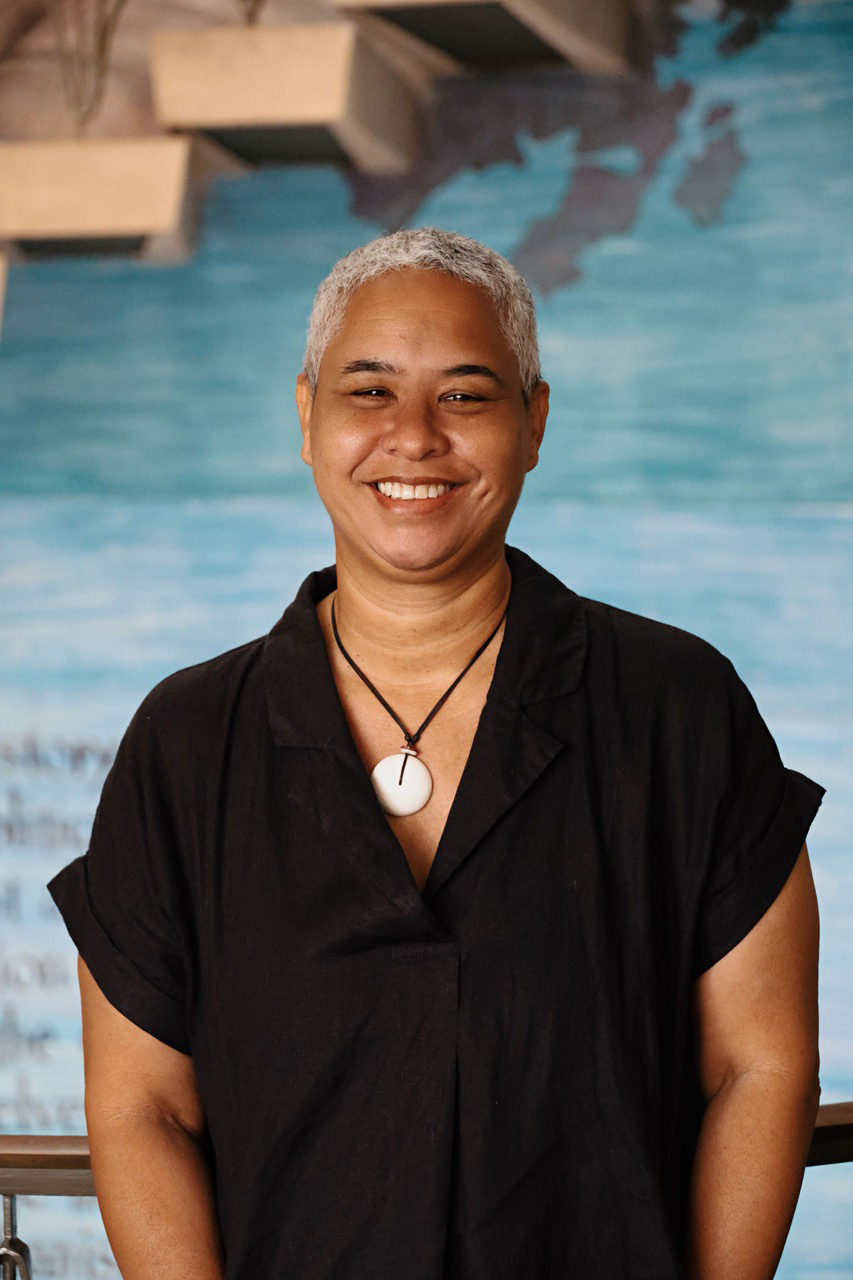
Q: Can you start by telling us where you grew up and a little about your early life?
A: I was born in Los Angeles in 1970 and grew up in Inglewood, California. My father is Hawaiian, Japanese, and Scottish from Maui, and my mother is Black and from Dallas. They met on a blind date.
Growing up in L.A. during the Vietnam and post-Vietnam era, the community around me was incredibly diverse - mixed Vietnamese kids, Black kids, Latinos. Being mixed was completely normal to me. I didn't realize until much later that that wasn't the case everywhere.
My dad deliberately took me to libraries and museums. There was a small Native American museum in Inglewood that very few people even knew about, and that's where I first learned about stolen land. Reading was everything in our house. I would take out ten books at a time from the library. By the time I was eight years old, my reading level tested at the college level.
That obsession with knowledge came from my dad. He had a photographic memory and was deeply into genealogy. I didn't appreciate it as a kid, but it stayed with me.
My father was also a mailman, and labor with dignity was deeply valued in our household. There was no shame in that work - especially because he had a union behind him. My mom, on the other hand, worked in much more corporate environments, including American Airlines. Seeing those two worlds side by side was my first real exposure to labor.
Q: Was that your first exposure to unions and labor?
A: Yes - and it went even deeper. Both of my parents come from plantation histories. My dad and his brothers worked in the pineapple fields on Maui growing up. My mom's family picked cotton in the plantation South. Her older sister started school years late because she was working in the fields.
Knowing that history made me very aware of what plantations did to families and how deeply labor shaped our lives across generations — one rooted in sugar, the other in cotton.
Q: How did your awareness of labor expand during your college years?
A: When I went to school in the Bay Area, the class divide became impossible to ignore. You could really see the sharp separation - homelessness, wealth, power —all right there.
I was around a lot of people who were developing politically. Friends were becoming union organizers, and I realized how little we're taught about labor in school. I wanted to understand organizing — what it actually meant.
I spent a lot of time on picket lines, listening to grievance stories, learning how workers defend themselves. I was around labor all the time, and I became kind of obsessed with it.
That's also when I fell in love with the ILWU — especially in Oakland. They were incredibly radical. They would shut down the entire port to oppose war or take international stands. Watching dockworkers stop the flow of global trade made me realize: this is power. I remember thinking, dockworkers can stop the whole planet. That kind of power was inspiring. Unions weren't just about wages.
Q: What brought you back to Hawaii?
A: By the early 2000s, I had been organizing in the Bay around different social justice issues. But I hit a wall. Everyone around me thought the same way, and I felt burnt out. I needed struggle again - I needed to know what I actually believed.
At the same time, I kept having dreams about Hawai'i. There were signs everywhere telling me it was time to come home. So in 2002, I moved back to Maui to reconnect with ‘āina and with my family's roots.
I didn't want to come back and just do nonprofit work. I wanted to work with my hands. I became a carpenter's apprentice with Local 745 and learned how to build houses. I was often the only woman on job sites with 100 or more men.
Being a worker again meant a lot to me. It grounded me.
Q: What shifted that path for you?
A: I was working on a hotel site on Maui that had never been blessed. Every kanaka on that site got injured in some way. People fell, twisted ankles - and people died. After several deaths, I knew I couldn't keep doing that work. It wasn't right.
Not long after, I began working with Maui Economic Opportunity doing prison re-entry and abolition work. Almost everyone on my caseload was Hawaiian. We helped people get their licenses back, reconnect with family, return to cultural practices, and re-enter community.
That work filled my soul - but it was also heavy. If someone went back to prison, it crushed me. It opened up difficult conversations in my own family and revealed parts of our history I hadn't known. That period - reconnecting to family land, caring for graves, and learning in a very personal way the systemic issues that face Hawaii grounded me in Hawai'i in a way nothing else could.
Q: How did you move into library and archive work?
A: When we moved to O'ahu, I went back to school and earned an art degree in photography. While at UH, I began working at Sinclair Library and noticed Pacific journals being damaged and neglected. I helped decide what should be preserved.
That led me to the UH preservation lab and rare books collections. That's when it clicked: librarians and archivists control knowledge. I was angry to realize how few Hawaiians were controlling Hawaiian and Pacific knowledge. That anger pushed me into library science and into the broader Hawaiian library movement - fighting for Pacific-centered curriculum, teachers, and priorities.
People don't usually think of labor archives as a valuable source of knowledge. But they should. Labor history has been erased from most conversations. And that is the conversation we need to be having. If I could pick any archive in the world that tied all of my passions together, it was the ILWU.
Q: What should members understand about the about the ILWU Library?
A: Well, it's a genealogical resource. If your family was ever part of this union, there's a good chance we have a record of them.
But more than that, the library is the heart and soul of the union. It holds our struggles, sacrifices, wins, and losses. It's contracts and grievances — but it's also banners, posters, photograph. uttons, films, and leaflets. Thousands of photographs.
It's memory - memory the bosses would rather you forget.
You can't know how to win if you don't know what we were fighting for in the first place. Especially now, when so many of those hard-won benefits are being chipped away.
Q: What is your vision for the library?
A: I want it to be a living reading room for members and staff — organized, accessible, and welcoming. Sanach wren, people bringing is encouraged, and where it's okay to be
This library belongs to the members. I want people to feel comfortable stopping by, asking questions, and spending time here. This is your space.
Q: What's your final message to members?
A: Come by. Ask questions. There are no dumb questions.
If youʻre looking for an ancestor, a photo, or a piece of history, let me know. Iʻve watched people cry after finding images of their family for the first time.
This library exists for you. Come use it.